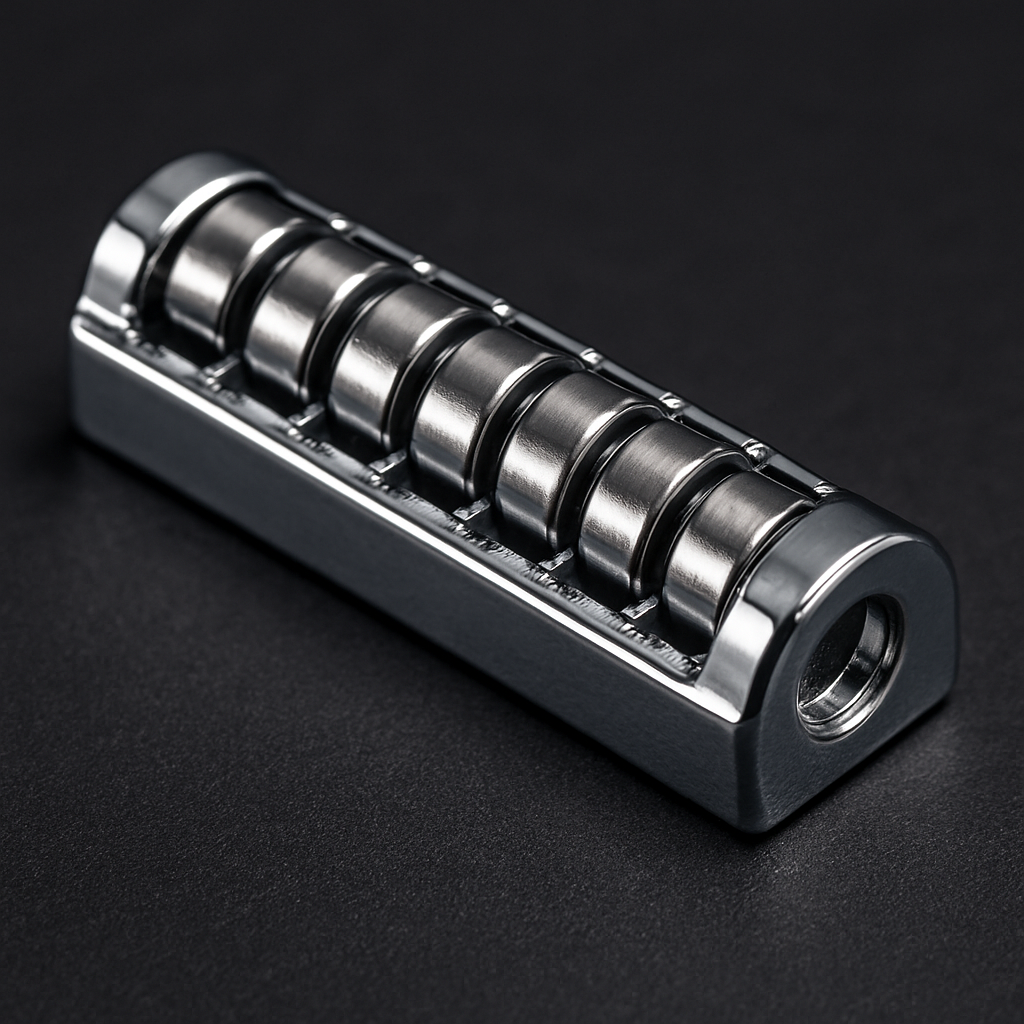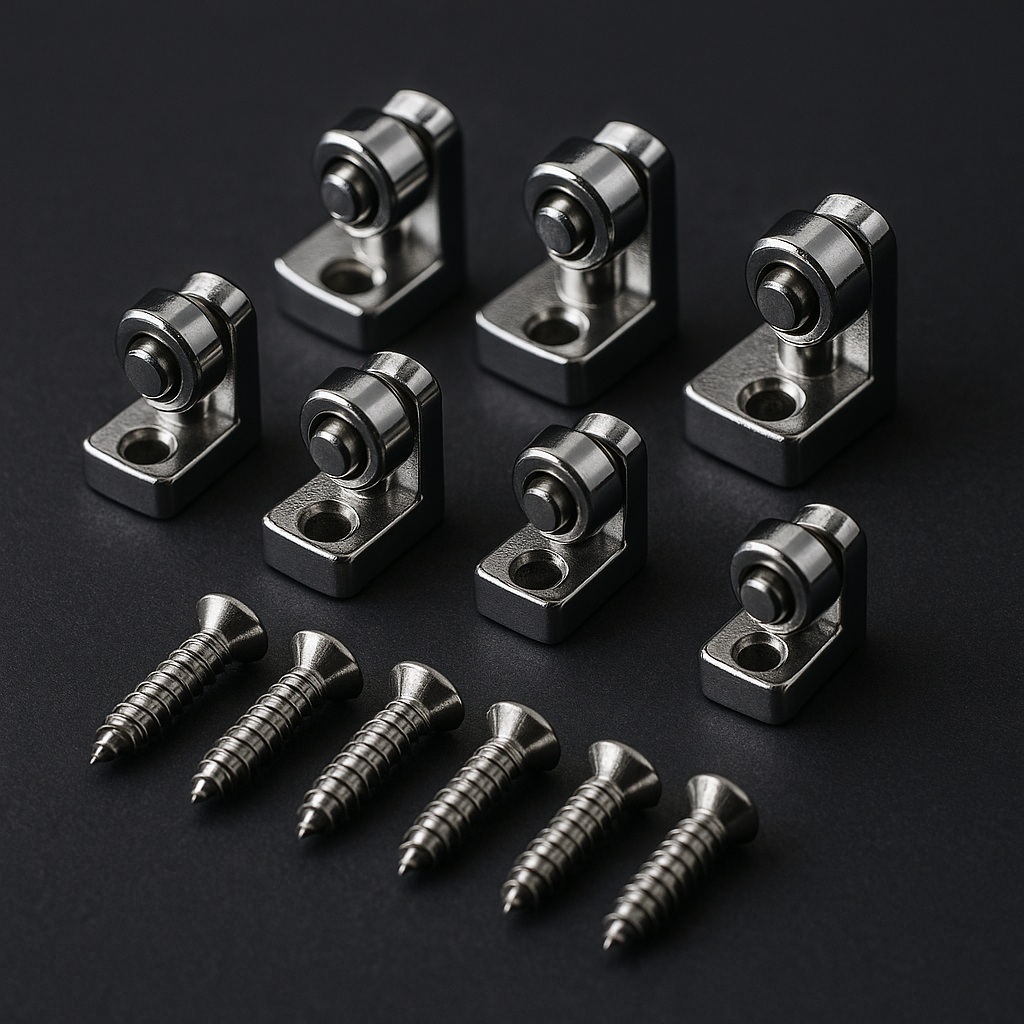
Tuning stability problems have exactly two sources: string friction at the nut, and string slippage at the peg. Most players blame strings. Most players are wrong.
Bad nut slots create binding friction — the string catches on its way back to pitch after a bend. Bad tuning pegs lose their hold over hundreds of hours of play, or were never tight to begin with because the string had 4–6 winds that can't maintain consistent tension. Locking tuners solve the second problem completely. If you've already got a roller nut or a properly cut bone nut, locking tuners are the final piece.
What Locking Tuners Actually Do
Standard tuners work by wrapping string around a post. The friction of those winds holds tension. It's reliable until it isn't — worn winds, poorly seated strings, or cheap pot metal gears that lose their mesh over time all introduce micro-slippage you feel as flat notes mid-song.
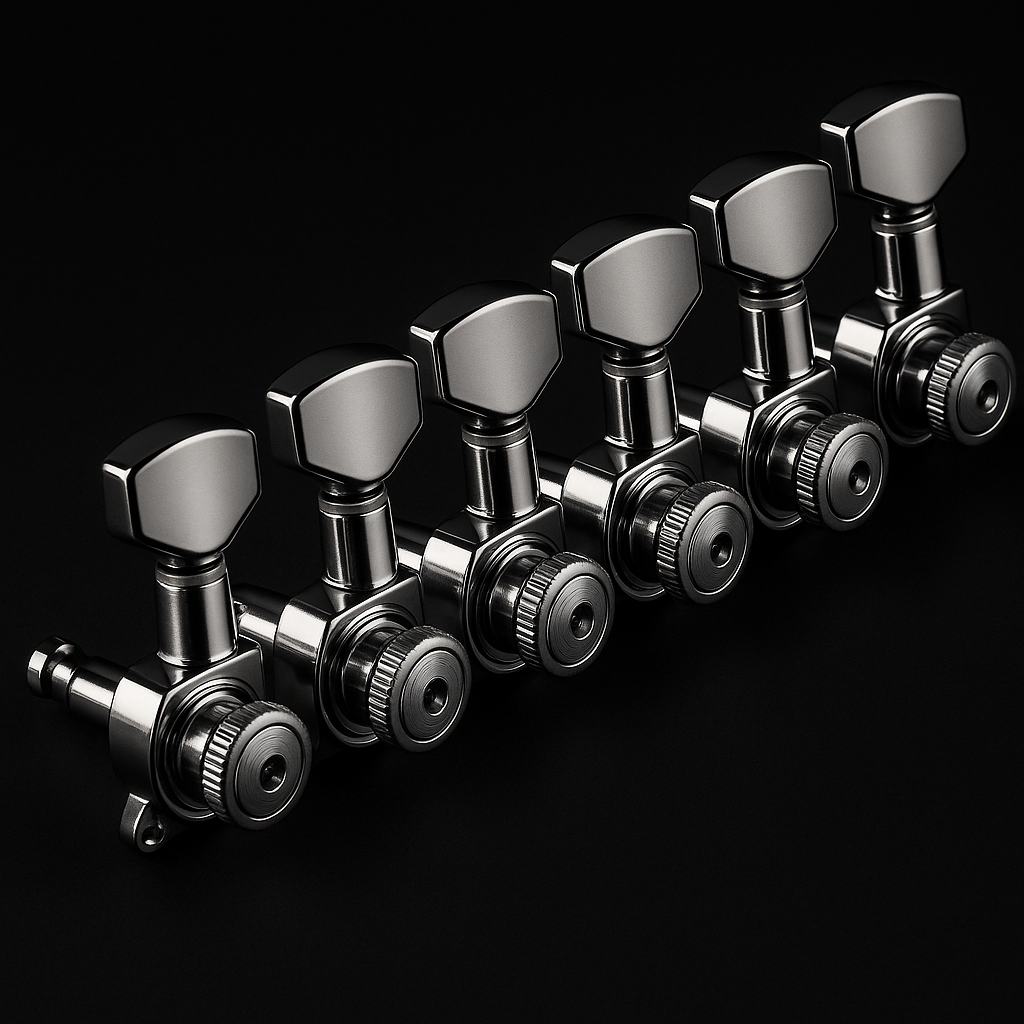
Locking tuners eliminate the wind entirely. You thread the string through the post, turn a thumb wheel (or tighten a mechanism) that clamps the string mechanically, then tune up. One wind, or zero winds. The string can't slip because it's clamped. Simple, obvious, surprisingly underused.
Does the Gear Ratio Matter?
Yes, but not for the reason most players think. Higher gear ratios (18:1 vs 14:1) give you finer control per rotation — more tuning precision with less wrist movement. On a 14:1 ratio, one full rotation of the tuning peg changes pitch roughly a half step. On 18:1, you get slightly less movement per rotation, which means easier fine-tuning without overshooting.
For drop-tuning players, this matters more than most. If you're dropping your low E to D or C between songs, you want the precision to hit the note without multiple micro-corrections. 18:1 is the IronTone spec for exactly this reason.
Drop Tunings Specifically
Standard locking tuners improve intonation stability for everyone. But for players running drop tunings — drop D, drop C, DADGAD, or any open tuning — the gain is magnified.
When you detune a string, the reduced tension makes the string more susceptible to movement. More susceptible to temperature changes, humidity shifts, neck flex from body heat at a show. Locking tuners don't eliminate physics, but they remove the peg-slip variable completely. The only movement that matters is neck movement — and a truss rod handles most of that.
Heavy riffing in drop D on a guitar with standard tuners is a recipe for going flat by bar 32. With locking tuners, you play longer sets in tune.
Installation: Step by Step
Most 6-in-line locking tuners are direct replacements for standard Fender-spec peg holes (10mm diameter). If your guitar has a 3+3 headstock or non-standard peg holes, check specs first. For the IronTone set, here's the install:
- Remove old tuners. Loosen and remove each string. Unscrew the mounting screws (usually 2 per tuner) and the ferrule nut on the front of the headstock. Pull the old tuner out.
- Check the peg hole diameter. 10mm is standard Fender spec. If the hole is smaller, you'll need a reamer — not a drill. Reamers remove material slowly and cleanly. Drills bite and can split headstock veneer.
- Insert the new tuner. Feed the post through the front of the headstock. Hand-thread the ferrule nut from the back until snug, then tighten with a socket driver. Don't overtorque — you're clamping against wood.
- Mount the alignment screw. Most locking tuners include a small alignment screw that prevents the tuner body from rotating. Mark the hole position with a pencil, pre-drill with a 1mm bit, and drive the screw. This keeps the tuner straight under string tension.
- Restring with one wind. Thread the string through the post from below, pull it snug, thumb-wheel or lever-lock the string in place, then tune up. One wrap is fine. Zero is also fine. The lock holds either way.
- Stretch the strings. New strings will stretch and go flat for the first 30 minutes of play regardless of tuner quality. Pull each string gently away from the fretboard at the 12th fret, retune, repeat until stable. This is normal.
Common Mistakes
Overtightening the ferrule nut. Wood compresses. Too much torque and you crack the headstock veneer, or strip the nut. Snug plus a quarter turn is enough.
Skipping the alignment screw. Some players think it's optional. It's not. String tension pulls the tuner body counterclockwise over time. Without the alignment screw, your tuner slowly rotates out of position. Ship it properly the first time.
Not stretching strings after install. Every player does this once and then wonders why their guitar won't hold tune. Stretch them. It takes five minutes. Skip it and it costs you two songs.
Locking tuners are a $90 upgrade that removes a problem permanently. That math works on any guitar worth keeping.
— CHUKK